


October Rose Care
No two gardens experience October the same way. Roses in warmer climates are still showing off their last blooms of the season, while roses further north are beginning to wind down for winter. Wherever you garden, it's time for autumn cleanup before winterizing the garden: rake up fallen leaves, prune overgrowth, and give your roses the care they need before the season turns.
Check your region below to see exactly how to care for your roses this month.
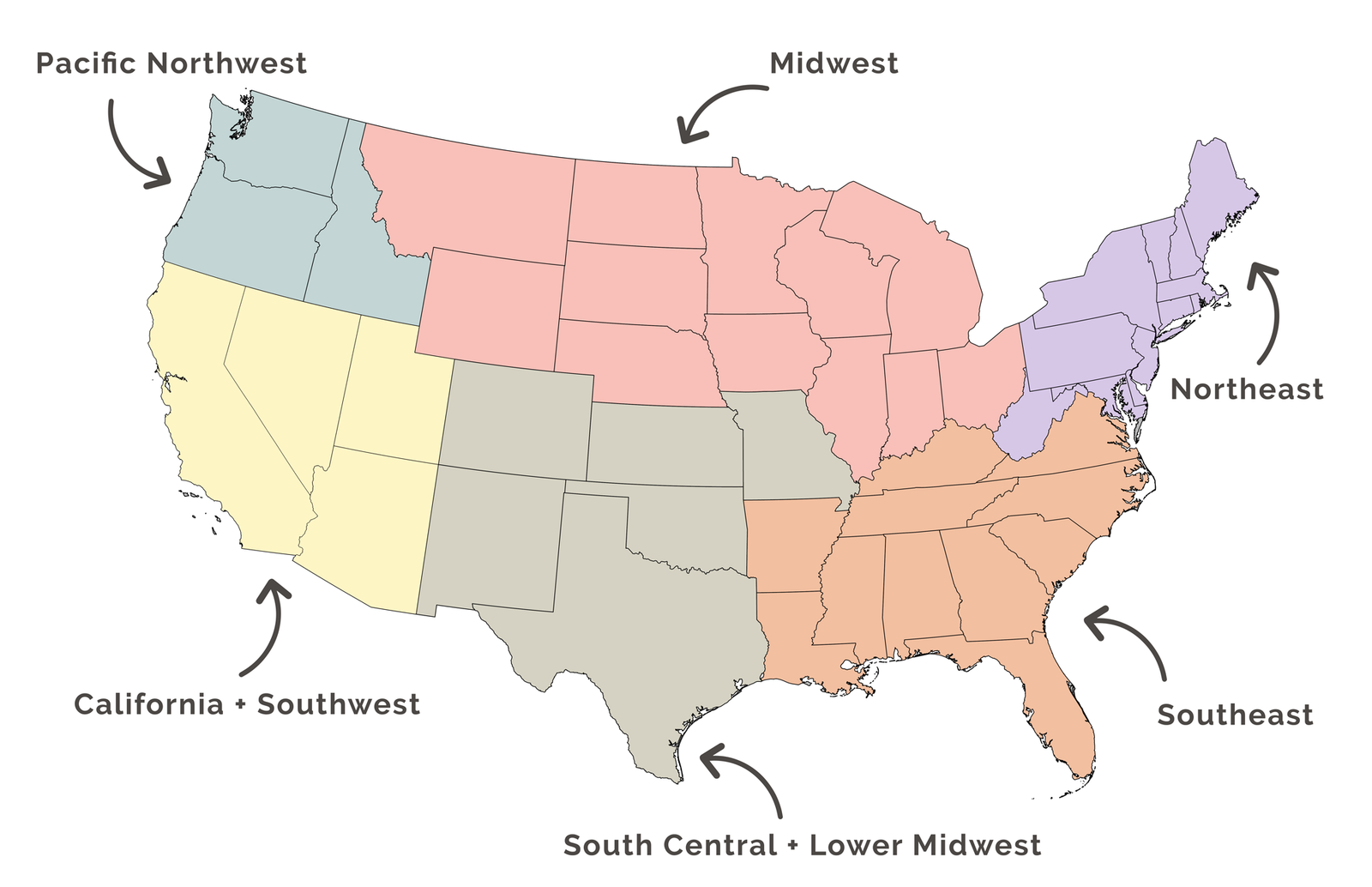
October Rose Tasks by Region
Southeast
Plant Roses: Still more than six weeks from your first frost? You're in the clear to plant roses right now. Fall's milder weather and warm, workable soil make this the easiest time to get roses in the ground. Choose a sunny spot with well-drained soil, water well after planting, and finish with 2 to 3 inches of mulch. Mulch holds moisture, protects roots as temperatures drop, and keeps weeds down.
Roots settle in now and get a head start before winter. Come spring, your roses will be ready to grow. Read our step-by-step planting guide.
Stop Fertilizing If Your First Frost Is Six Weeks Away or Less: This gives your roses time to harden off for winter instead of pushing tender new growth right as cold weather arrives. Check your first frost date here.
Protect Against Disease: The Southeast's warm and damp autumn weather makes roses more susceptible to fungal issues like black spot. Keep in mind that you cannot cure leaves that are already infected, but you can stop the fungus from spreading to new growth. Stay ahead of problems by applying a quality fungicide to keep healthy foliage protected. Explore our recommended options for reliable protection.
Water: Depending on rainfall, if you're getting less than one inch per week, you may need to deeply water your roses about once per week. Deep watering encourages deep, strong roots, and watering at the base keeps the foliage dry to help prevent disease. Want to see exactly how it's done? Watch our quick video on how to properly water roses.
Stop Deadheading Now: During the growing season, removing spent blooms tells your roses to keep producing flowers. When you stop deadheading, she'll set hips instead. Those hips are her signal to wind down and prepare for winter dormancy.
Remove Diseased Foliage and Crossing Canes: Remove diseased leaves by clipping rather than pulling, since torn stems create wounds that invite fungal problems. Also watch for canes that cross and rub against each other in the wind; the friction wears down bark and opens the same kind of entry point.
Prepare for Winter Wind: Top-heavy canes are vulnerable once winter winds pick up. Prune overgrowth on Climbing Roses and tie the canes securely to their structure, and top Hybrid Teas and Shrub Roses at 4'–5'. This matters most in colder climates, where wind combined with freeze-thaw cycles can rock a rose loose from the ground. This can be done towards the end of October.
Clear Fallen Leaves: Many fungal diseases overwinter in leaf litter at the base of the plant, ready to reinfect roses come spring. Rake up and discard fallen leaves rather than composting them, so the material doesn't carry pathogens back into your garden.
Insulate with Mulch: A 2″–3″ layer of compost or mulch (we love to use Mint Compost) does double duty, feeding the soil with nutrients while insulating roots against cold snaps.
Southwest + California
Plant Roses: Fall's milder weather and warm, workable soil make this the easiest time to plant roses. Choose a sunny spot with well-drained soil, water well after planting, and finish with 2 to 3 inches of mulch to help hold moisture, protect roots as temperatures drop, and reduce weeds.
Roots settle in now and get a head start before winter. Come spring, your roses will be ready to grow. No need to wait to shop, though. Just choose a future delivery date at checkout, so your rose arrives right when you're ready.
If you're still seeing day after day of 90 degrees and up, wait until later fall to plant, once things cool down.
Read our step-by-step planting guide.
Keep Fertilizing: Roses are heavy feeders, so keep them on a steady schedule through the growing season, feeding every four to six weeks (or as the label directs) for strong growth and abundant blooms. In the first season, a gentle liquid like Founders Fish Fertilizer gives young plants a strong start. Once established, you can stick with that or try a granular feed like Heirloom Boost & Bloom for continued nourishment.
Water: Your roses thrive on consistent moisture without ever sitting in waterlogged soil. Aim to water deeply two to three times a week, allowing the soil to dry slightly in between. When temperatures spike, keep an eye on the soil since your roses may need a little extra. Deep watering encourages strong, resilient roots, while watering at the base keeps the leaves dry and disease at bay. Want to see exactly how it's done? Watch our quick video on how to properly water roses.
Check Mulch Levels: Maintain a 2- to 3-inch layer of mulch around the base of the plant to keep soil temperatures down and reduce water evaporation.
Deadheading: Keep the blooms coming by snipping off spent flowers throughout the season. Cut just above the first set of five healthy leaves at a slight angle, so water runs off. Removing faded blooms helps your rose put its energy into fresh growth and more beautiful flowers. Watch our quick how-to video and see just how easy deadheading can be.
Protect Against Disease: In warm, dry climates, roses are less prone to disease, but it's still wise to check plants regularly so you can catch any issues early. If needed, apply a quality fungicide to keep foliage healthy and looking its best. Explore our recommended options for reliable protection.
Keep an Eye on Pests: Check your roses regularly for common pests like spider mites. At the first sign of trouble, treat with a gentle insecticidal soap or an insecticide spray, repeating as directed to bring an infestation under control.
South Central + Lower Midwest
Plant Roses: Still more than six weeks from your first frost? You're in the clear to plant roses right now. Fall's milder weather and warm, workable soil make this the easiest time to get roses in the ground. Choose a sunny spot with well-drained soil, water well after planting, and finish with 2 to 3 inches of mulch. Mulch holds moisture, protects roots as temperatures drop, and keeps weeds down.
Roots settle in now and get a head start before winter. Come spring, your roses will be ready to grow. Read our step-by-step planting guide.
Water: Depending on rainfall, if you're getting less than one inch per week, you may need to deeply water your roses about once per week. Deep watering encourages deep, strong roots, and watering at the base keeps the foliage dry to help prevent disease. Want to see exactly how it's done? Watch our quick video on how to properly water roses.
Stop Fertilizing: Your roses need to go dormant.
Stop Deadheading Now: During the growing season, removing spent blooms tells your roses to keep producing flowers. When you stop deadheading, she'll set hips instead. Those hips are her signal to wind down and prepare for winter dormancy.
Protect Against Disease: Early autumn rain brings cool, humid weather to the Pacific Northwest, creating ideal conditions for fungal diseases like black spot and powdery mildew. Keep in mind that you cannot cure leaves that are already infected, but you can stop the fungus from spreading to new growth. Stay ahead of problems by applying a quality fungicide to keep healthy foliage protected. Explore our recommended options for reliable protection.
Remove Diseased Foliage and Crossing Canes: Remove diseased leaves by clipping rather than pulling, since torn stems create wounds that invite fungal problems. Also watch for canes that cross and rub against each other in the wind; the friction wears down bark and opens the same kind of entry point.
Prepare for Winter Wind: Top-heavy canes are vulnerable once winter winds pick up. Prune overgrowth on Climbing Roses and tie the canes securely to their structure, and top Hybrid Teas and Shrub Roses at 4'–5'. This matters most in colder climates, where wind combined with freeze-thaw cycles can rock a rose loose from the ground. This can be done toward the end of October.
Clear Fallen Leaves: Many fungal diseases overwinter in leaf litter at the base of the plant, ready to reinfect roses come spring. Rake up and discard fallen leaves rather than composting them, so the material doesn't carry pathogens back into your garden.
Pacific Northwest
Water: Roses in the Pacific Northwest are usually well cared for by autumn rain, so there's no need to water them. During unusually dry spells, you may need to water occasionally, and keep an eye on the moisture levels of your container roses, since container soil can dry out faster.
Stop Fertilizing: Your roses need to go dormant.
Stop Deadheading Now: During the growing season, removing spent blooms tells your roses to keep producing flowers. When you stop deadheading, she'll set hips instead. Those hips are her signal to wind down and prepare for winter dormancy.
Protect Against Disease: Early autumn rain brings cool, humid weather to the Pacific Northwest, creating ideal conditions for fungal diseases like black spot and powdery mildew. Keep in mind that you cannot cure leaves that are already infected, but you can stop the fungus from spreading to new growth. Stay ahead of problems by applying a quality fungicide to keep healthy foliage protected. Explore our recommended options for reliable protection.
Remove Diseased Foliage and Crossing Canes: Remove diseased leaves by clipping rather than pulling, since torn stems create wounds that invite fungal problems. Also watch for canes that cross and rub against each other in the wind; the friction wears down bark and opens the same kind of entry point.
Prepare for Winter Wind: Top-heavy canes are vulnerable once winter winds pick up. Prune overgrowth on Climbing Roses and tie the canes securely to their structure, and top Hybrid Teas and Shrub Roses at 4'–5'. This matters most in colder climates, where wind combined with freeze-thaw cycles can rock a rose loose from the ground. This can be done toward the end of October.
Clear Fallen Leaves: Many fungal diseases overwinter in leaf litter at the base of the plant, ready to reinfect roses come spring. Rake up and discard fallen leaves rather than composting them, so the material doesn't carry pathogens back into your garden.
Insulate with Mulch: A 2″–3″ layer of compost or mulch (we love to use Mint Compost) does double duty, feeding the soil with nutrients while insulating roots against cold snaps.
Northeast
Stop Fertilizing: Your roses need to go dormant.
Stop Deadheading: During the growing season, removing spent blooms tells your roses to keep producing flowers. When you stop deadheading, she'll set hips instead. Those hips are her signal to wind down and prepare for winter dormancy.
Remove Diseased Foliage and Crossing Canes: Remove diseased leaves by clipping rather than pulling, since torn stems create wounds that invite fungal problems. Also watch for canes that cross and rub against each other in the wind; the friction wears down bark and opens the same kind of entry point.
Prepare for Winter Wind: Top-heavy canes are vulnerable once winter winds pick up. Prune overgrowth on Climbing Roses and tie the canes securely to their structure, and top Hybrid Teas and Shrub Roses at 4'–5'. This matters most in colder climates, where wind combined with freeze-thaw cycles can rock a rose loose from the ground. This can be done toward the end of October.
Clear Fallen Leaves: Many fungal diseases overwinter in leaf litter at the base of the plant, ready to reinfect roses come spring. Rake up and discard fallen leaves rather than composting them, so the material doesn't carry pathogens back into your garden.
Midwest
Stop Fertilizing: Your roses need to go dormant.
Stop Deadheading: During the growing season, removing spent blooms tells your roses to keep producing flowers. When you stop deadheading, she'll set hips instead. Those hips are her signal to wind down and prepare for winter dormancy.
Remove Diseased Foliage and Crossing Canes: Remove diseased leaves by clipping rather than pulling, since torn stems create wounds that invite fungal problems. Also watch for canes that cross and rub against each other in the wind; the friction wears down bark and opens the same kind of entry point.
Prepare for Winter Wind:Top-heavy canes are vulnerable once winter winds pick up. Prune overgrowth on Climbing Roses and tie the canes securely to their structure, and top Hybrid Teas and Shrub Roses at 4'–5'. This matters most in colder climates, where wind combined with freeze-thaw cycles can rock a rose loose from the ground. This can be done toward the end of October.
Clear Fallen Leaves: Many fungal diseases overwinter in leaf litter at the base of the plant, ready to reinfect roses come spring. Rake up and discard fallen leaves rather than composting them, so the material doesn't carry pathogens back into your garden.